Compagnie A HAUTEUR DES YEUX / Padrut Tacchella
les marionnettes à fils – automates
une recherche qui a commencé en 1984
Analyser puis produire des mouvements dansés, chercher le lien entre marionnette, danseuse et le marionnettiste, l’amplifier, le modifier, une recherche infinie…
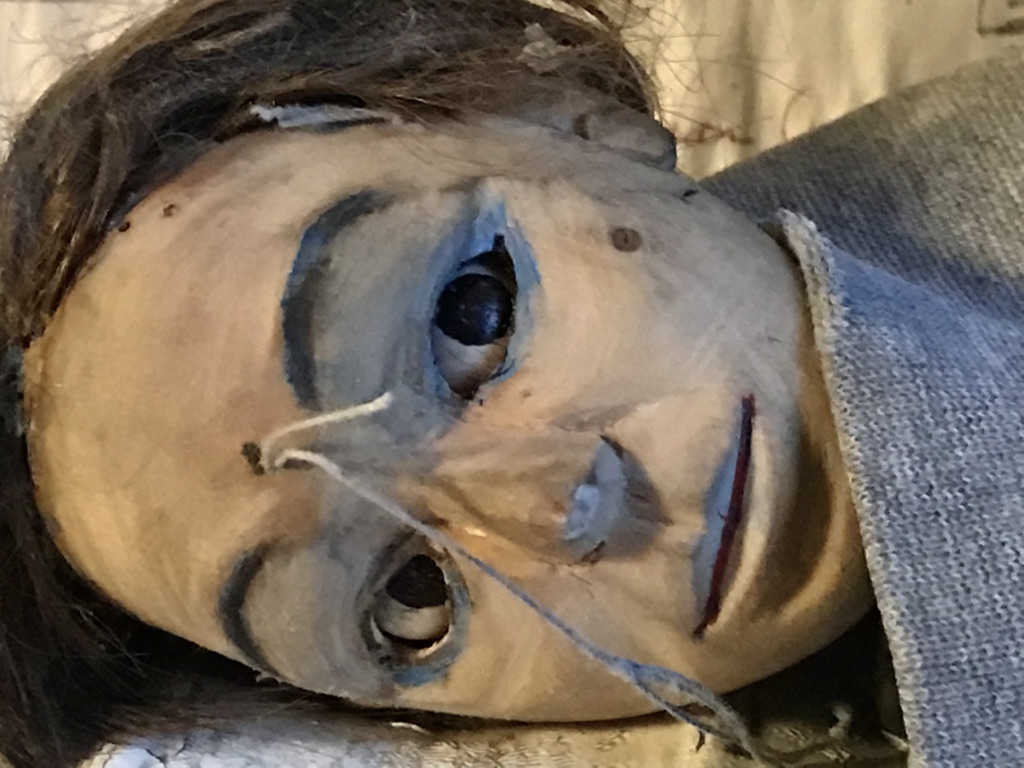
Les marionnettes – automates de la compagnie A HAUTEUR DES YEUX sont des prototypes de recherche, elles évoluent en permanence, leurs croix sont atypiques, mélanges de croix traditionnelles, commandes d’automates, systèmes à multiples joysticks… Au début était l’idée de donner à voir aux spectateurs les créations à la même hauteur qu’étaient les yeux des marionnettes – aujourd’hui le marionnettiste rejoint à son tour cette même hauteur…
Un des centres de cette recherche est un travail sur la mémoire de mouvements à long terme : c’est comme si les marionnettes accumulaient, mémorisaient des mouvements perçus lors des créations et tout le long de leur existence, de même que les mouvements qu’elles puisent dans le « sous-sol de la conscience collective humaine » ou lors de leurs périodes d’hibernation jachère ; les marionnettes dorment, rêvent, ont un rapport autre que nous à l’évolution du temps.
Les marionnettes-automates s’expriment sans paroles, elles écoutent, elles observent, personnages imaginaires et réels en même temps, avec une étrange indépendance par rapport à leur marionnettiste. Elles sont détachées des contes, ont leur propre passé, leur propre histoire.
XD4r, marionnette hydraulique a fait ses premiers pas « sans fils », cherchant l’équilibre de son corps lourd en passant d’un pied à l’autre, relié par des tuyaux et de l’eau à 15 bar de pression aux 10 marionnettistes. Son rêve de traverser le pont de la liberté à Budapest est resté inachevé. Okana : un travail sur la respiration, le regard, les mouvements à fils complexes du roulis, tangage et lacet…Pahuljica, une automate-marionnette sortie des halls de gare des années 1970…LUTKO porte des stigmates d’une guerre. Chaque marionnette-automate a sa propre manière de s’exprimer et entrer en résonance avec la danseuse, avec le public.
Les marionnettes-automates sont jouées en solo, à deux, à dix marionnettistes. Ces êtres en bois, acier, fil nous regardent ou détournent leur regard de nous. Une approche vers la robotique ? Oui et non. Le concept du « fil » est déjà en soi une première abstraction mécanisée tendant vers une autonomie, vers l’automate. L’automatisation des mouvements par les moyens du 20-21 ème siècle s’intègre dans ce concept et le complète, mais ne remplace en aucun cas le jeu intuitif, le ressenti humain, ce monde secret qu’en tant que marionnettiste nous pouvons approcher en le représentant, mais qui restera énigme – pour le public, de même que pour le marionnettiste.
Компанія A HAUTEUR DES YEUX / Padrut Tacchella
ляльки на нитках – автомати
дослідження, яке розпочалося в 1984 році
Аналізувати, а потім відтворювати танцювальні рухи, шукати зв’язок між лялькою, танцівницею та ляльковиком, підсилювати його, змінювати – нескінченне дослідження…
Ляльки-автомати компанії A HAUTEUR DES YEUX є прототипами досліджень, вони постійно еволюціонують, їхні хрести є нетиповими, поєднанням традиційних хрестів, команд автоматів, систем з декількома джойстиками… Спочатку була ідея показати глядачам твори на тій самій висоті, що й очі ляльок – сьогодні ляльковод, у свою чергу, досягає цієї ж висоти…
Одним із центрів цього дослідження є робота над довгостроковою пам’яттю рухів: це ніби ляльки накопичують, запам’ятовують рухи, сприйняті під час створення і протягом усього свого існування, а також рухи, які вони черпають із «підземелля колективної свідомості людства» або під час періодів сплячки; ляльки сплять, мріють, мають інше, ніж ми, ставлення до плину часу.
Ляльки-автомати висловлюються без слів, вони слухають, спостерігають, є одночасно уявними і реальними персонажами, з дивною незалежністю від свого ляльковода. Вони відірвані від казок, мають своє власне минуле, свою власну історію.
XD4r, гідравлічна лялька, зробила свої перші кроки «без дротів», шукаючи рівновагу свого важкого тіла, переходячи з однієї ноги на іншу, з’єднана трубами і водою під тиском 15 бар з 10 ляльководами. Її мрія перейти міст свободи в Будапешті залишилася нездійсненою. Okana: робота над диханням, поглядом, складними рухами нахилу, підйому і повороту… Pahuljica, автомат-лялька, що вийшла з залізничних вокзалів 1970-х років… LUTKO несе на собі сліди війни. Кожна лялька-автомат має свій власний спосіб вираження і резонує з танцівницею, з публікою.
Ляльки-автомати грають соло, удвох, десятьма ляльковиками. Ці істоти з дерева, сталі, дроту дивляться на нас або відвертають від нас погляд. Підхід до робототехніки? Так і ні. Концепція «дроту» вже сама по собі є першою механізованою абстракцією, що тяжіє до автономності, до автомата. Автоматизація рухів за допомогою засобів 20-21 століття вписується в цю концепцію і доповнює її, але ні в якому разі не замінює інтуїтивну гру, людські відчуття, той таємний світ, до якого ми, ляльководи, можемо наблизитися, представляючи його, але який залишиться загадкою – як для глядачів, так і для ляльководів.
A HAUTEUR DES YEUX Company / Padrut Tacchella
string puppets – automatons
a research that began in 1984
Analysing then producing dance movements, seeking the link between puppet, dancer and puppeteer, amplifying it, modifying it, an endless quest…
The puppets – automatons of the company A HAUTEUR DES YEUX are research prototypes, they are constantly evolving, their crosses are atypical, a mixture of traditional crosses, automaton controls, multiple joystick systems… Initially, the idea was to show the audience the creations at the same height as the puppets’ eyes – today, the puppeteer also joins them at this same height…
One of the focuses of this research is work on long-term movement memory: it is as if the puppets accumulate and memorise movements perceived during creations and throughout their existence, as well as movements they draw from the ‘subsoil of collective human consciousness’ or during their periods of hibernation; puppets sleep, dream, and have a different relationship to the passage of time than we do.
Automated puppets express themselves without words; they listen, they observe, imaginary and real characters at the same time, with a strange independence from their puppeteer. They are detached from stories, have their own past, their own history.
XD4r, a hydraulic puppet, took its first steps ‘without strings’, seeking balance for its heavy body by shifting from one foot to the other, connected by pipes and water at 15 bar pressure to the 10 puppeteers. Its dream of crossing the Liberty Bridge in Budapest remained unfulfilled. Okana: a work on breathing, gaze, complex movements of rolling, pitching and yawing… Pahuljica, an automaton-puppet from the railway stations of the 1970s… LUTKO bears the scars of war. Each automaton puppet has its own way of expressing itself and resonating with the dancer and the audience.
The automaton puppets are played solo, in pairs, or by ten puppeteers. These beings made of wood, steel and wire look at us or avert their gaze from us. An approach to robotics? Yes and no. The concept of the ‘wire’ is in itself a first mechanised abstraction tending towards autonomy, towards the automaton. The automation of movements by 20th- and 21st-century means is integrated into this concept and complements it, but in no way replaces intuitive play, human feeling, that secret world that we as puppeteers can approach by representing it, but which will remain an enigma – for the audience as well as for the puppeteer.
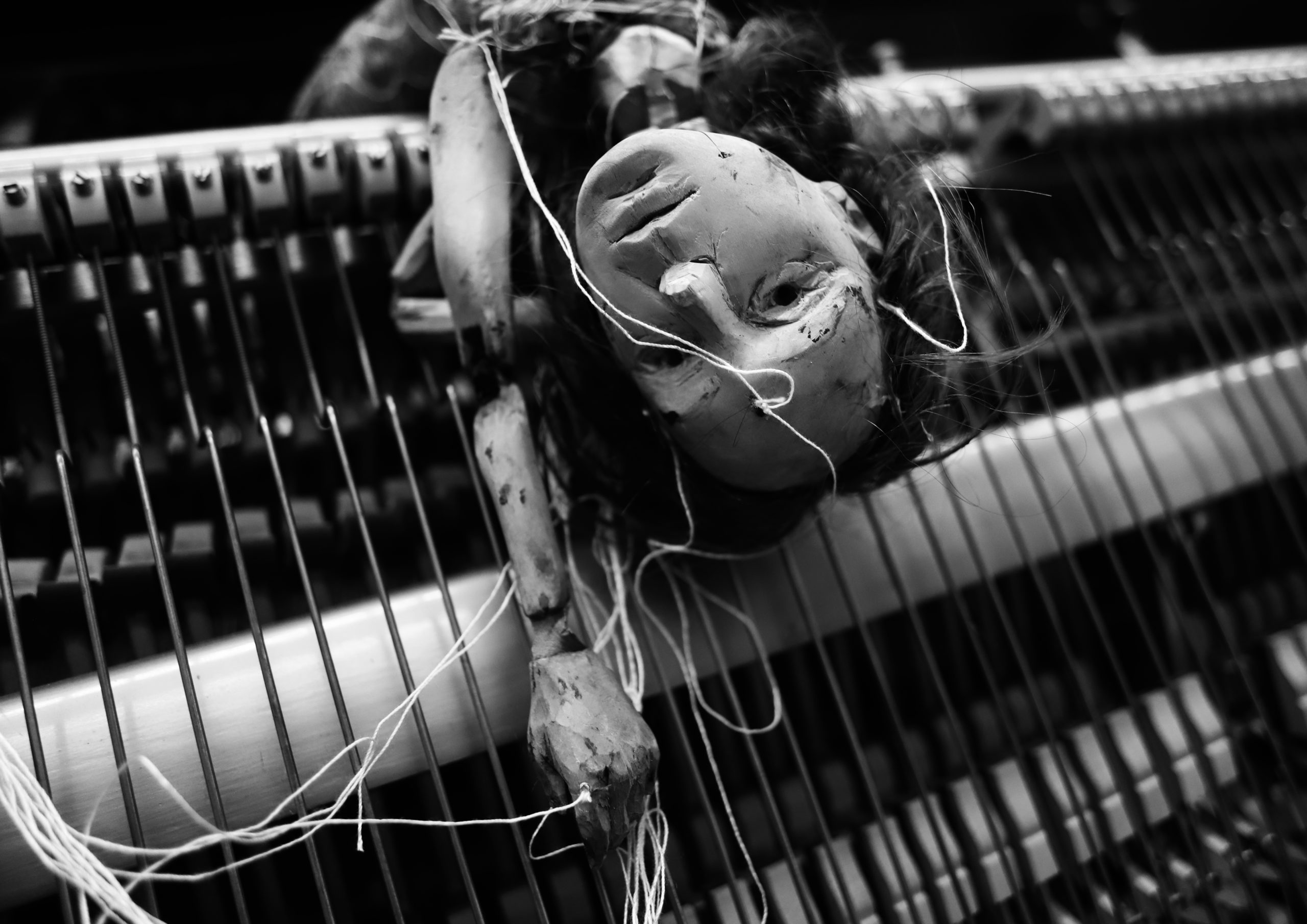
photo pt